Best Free Puzzle Games for Seniors to Stay Sharp in 2026
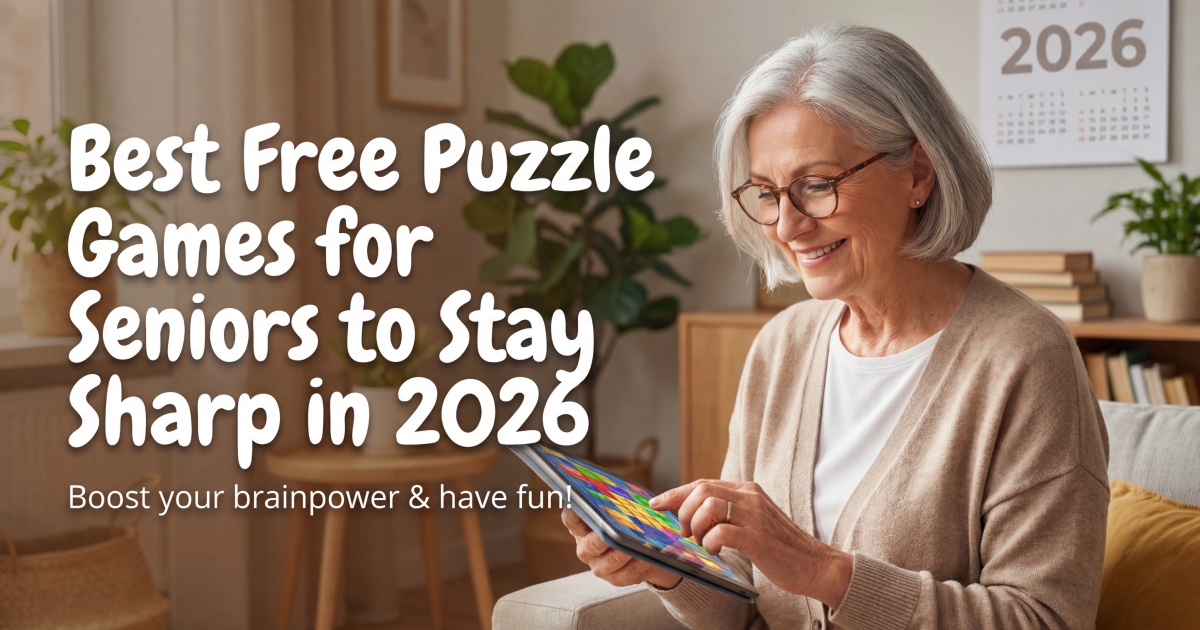
As we age, maintaining cognitive health becomes increasingly important. Puzzle games have emerged as one of the most effective and enjoyable ways for seniors to keep their minds sharp, boost memory, and enhance overall brain function. Unlike costly brain training programs or medications, puzzle games offer a fun, accessible, and scientifically-proven way to support cognitive wellness.
Whether you're a senior looking to stay mentally active or a family member searching for engaging activities for older adults, this comprehensive guide explores the best free puzzle games designed specifically with senior players in mind.
Why Puzzles Matter for Seniors: The Science Behind Brain Health
The aging brain faces natural challenges. Cognitive decline—a gradual decrease in memory, processing speed, and problem-solving abilities—affects many older adults. However, research consistently demonstrates that engaging in mental activities like puzzle games can significantly slow or even prevent this decline.
A landmark study published in the New England Journal of Medicine found that seniors who engaged in regular cognitive activities were 14% to 42% less likely to develop memory loss and cognitive decline. This is remarkable news: simple, enjoyable activities like playing puzzle games can have measurable protective effects on brain health.
Research Insight: The University of Exeter's research on over 19,000 participants demonstrated that people who regularly engaged in word and number puzzles had significantly sharper brains in later life, with better attention, reasoning, and memory performance compared to non-puzzle players.
The mechanisms behind these benefits are well-understood. When you solve puzzles, you're:
- Strengthening neural connections and building cognitive reserve
- Activating multiple brain regions involved in problem-solving and memory
- Practicing attention and concentration skills
- Engaging in logical reasoning and pattern recognition
- Creating a sense of accomplishment that boosts mental well-being
What Makes a Good Puzzle Game for Seniors?
Not all puzzle games are equally suitable for older adults. The best games for seniors incorporate specific features that respect the needs and preferences of this age group:
Accessibility Features
Seniors often appreciate games with larger text, clear graphics, and straightforward interfaces. Look for games that offer adjustable difficulty levels and don't require rapid reflexes or complex button combinations.
Reasonable Difficulty Curve
The ideal puzzle game for seniors starts with easier levels to build confidence, then gradually increases challenge. This prevents frustration while ensuring the brain remains adequately stimulated for cognitive benefits.
No Time Pressure
Unlike games designed for younger players, the best senior puzzle games allow players to solve at their own pace without countdown timers or speed requirements. This removes stress and allows for deeper engagement with the puzzle.
Social and Offline Options
Many seniors prefer games that can be played offline without internet connectivity and appreciate options for multiplayer or social play to connect with other players.
Top Puzzle Games Recommended for Seniors
1. Jigsaw Puzzles: The Classic Choice for Relaxation and Engagement
Jigsaw puzzles remain one of the most beloved activities for seniors worldwide. There's good reason for this enduring popularity: jigsaw puzzles perfectly combine accessibility, cognitive challenge, and the satisfaction of visible progress.
Why seniors love jigsaw puzzles:
- Familiar and intuitive: Most people have been completing jigsaw puzzles since childhood, making them immediately approachable
- Tactile engagement: The physical act of handling pieces provides sensory satisfaction
- Relaxing and meditative: The repetitive nature of sorting and fitting pieces creates a calming effect
- Social activity: Jigsaw puzzles encourage multigenerational and group play
- Clear progress: Unlike some puzzles, jigsaw progress is highly visible, providing motivation
- Flexible difficulty: Options range from 100-piece puzzles to 2000+ piece challenges
For digital jigsaw puzzles, try Puzzle Find's Jigsaw collection, which offers a wide variety of beautiful images and adjustable difficulty levels suitable for all skill levels.
2. Sudoku and Sudoku Blox: Logic Puzzles for Memory and Pattern Recognition
Sudoku Blox and traditional Sudoku puzzles have become globally recognized brain training tools. These number-logic games are ideal for seniors seeking to enhance memory, concentration, and logical reasoning.
Benefits of Sudoku for seniors:
- Daily habit formation: The addictive nature of Sudoku encourages regular, consistent play
- Memory improvement: Tracking numbers and possibilities strengthens working memory
- No special knowledge required: You only need to understand numbers 1-9; no vocabulary or trivia knowledge needed
- Scalable challenge: Difficulty ranges from beginner to expert levels
- Stress reduction: The focused, meditative quality of puzzle-solving reduces anxiety
Sudoku Blox offers an exciting variation where you place pre-shaped pieces instead of individual numbers, adding a visual-spatial element to the classic logic challenge. This variation appeals to seniors who want a fresh take on traditional Sudoku.
3. Nonograms (Picross): Visual Logic Meets Artistic Reward
Nonograms, also known as Picross puzzles, are logic puzzles that produce beautiful pixel-art images when completed correctly. These puzzles combine logical deduction with a rewarding visual outcome.
Why seniors enjoy nonograms:
- Visual logic puzzle: Different from number-based puzzles, nonograms engage visual-spatial reasoning
- Clear feedback: Correct moves produce visible parts of an image, providing immediate positive feedback
- Meditative quality: The systematic nature of solving creates a calm, focused state
- Artistic satisfaction: Revealing the final pixel-art image provides creative gratification
- No math required: Pure logic and deduction skills are all you need
Explore Nonogram puzzles at Puzzle Find to discover thousands of image-based logic challenges at varying difficulty levels.
4. iQ Mirror: Quick, Accessible Pattern Recognition Games
iQ Mirror offers pattern recognition puzzles in short, engaging sessions perfect for seniors who prefer bite-sized gaming experiences. These games train visual perception and quick thinking without requiring extended play sessions.
Advantages of iQ Mirror for seniors:
- Quick play sessions: Puzzles can be completed in 5-10 minutes, fitting easily into a daily routine
- Pattern recognition focus: Strengthens visual processing and spatial reasoning skills
- No time pressure: Play at your own pace in most puzzles
- Clean interface: Easy-to-understand mechanics with minimal visual clutter
Try iQ Mirror on Puzzle Find for quick cognitive workouts that fit into a busy schedule.
5. Crossword Puzzles: Building Vocabulary and General Knowledge
Crossword puzzles have long been a favorite among seniors, and for good reason. These word-based puzzles offer distinct cognitive benefits that complement number and logic-based games.
Why seniors love crosswords:
- Vocabulary enrichment: Learning new words and definitions keeps language skills sharp
- Knowledge application: General knowledge and trivia recall are valuable cognitive exercises
- Familiar format: Crosswords have been popular for generations, feeling comfortably familiar
- Varied difficulty: From cryptic to simple, options suit all skill levels
- Cultural relevance: Clues often reference history, literature, and current events, keeping minds engaged with the wider world
6. Word Search Puzzles: Visual Scanning and Relaxation
Word search puzzles offer a gentler form of cognitive engagement, perfect for seniors who want mental stimulation without intense logical challenge. These puzzles improve visual scanning skills and pattern recognition while remaining accessible to all skill levels.
Benefits of word searches for seniors:
- Visual scanning: Improves attention to detail and visual processing speed
- Low stress: No time pressure or complex logic; purely about finding words
- Easy to understand: Rules are simple and immediately apparent
- Vocabulary engagement: Builds familiarity with themed word sets
- Meditative quality: The repetitive, focused nature is calming
Making Puzzles a Daily Habit
The cognitive benefits of puzzle games accrue over time through consistent engagement. To maximize benefits, consider these strategies for building a sustainable puzzle habit:
Set a Regular Schedule
Choose a specific time each day for puzzle play—perhaps with morning coffee, after lunch, or in the evening. This consistency signals to your brain that puzzle time is part of your routine, making it easier to maintain the habit.
Start Small and Build
Rather than committing to hour-long puzzle sessions, start with 15-20 minutes daily. This modest commitment is more achievable and creates positive associations with puzzle games.
Vary Your Puzzle Types
Mixing different puzzle types—one day Sudoku, the next day jigsaw, then nonogram—prevents boredom while engaging different cognitive skills. This variety maximizes overall brain training benefits.
Track Your Progress
Many puzzle platforms offer streak trackers or completion statistics. Seeing your cumulative progress provides motivation and a sense of accomplishment.
Tip: Join online puzzle communities or play with friends and family. The social aspect adds enjoyment and accountability, making the habit more sustainable long-term.
Choosing the Right Difficulty Level
One of the most important factors in maintaining a consistent puzzle habit is selecting appropriate difficulty levels. This affects both enjoyment and cognitive benefit.
The Goldilocks Principle
Puzzles should be challenging enough to engage your brain but not so difficult that they cause frustration. You want that sweet spot where you're working hard but making consistent progress. If you're completing puzzles without thinking, they're too easy. If you're quitting in frustration, they're too hard.
Gradual Progression
Start with beginner or easy levels. As these become comfortable, gradually progress to intermediate, then harder levels. This graduated approach ensures your brain receives appropriate stimulation while building confidence and competence.
Adjusting as Needed
Your preferred difficulty level may change over time as you get better at puzzles. Periodically reassess your level and adjust upward if you want greater challenge, or downward if you're feeling overwhelmed.
Ready to Train Your Brain?
Explore our complete collection of free puzzle games designed for players of all ages and skill levels. From classic jigsaw puzzles to modern logic games, Puzzle Find has something for everyone.
Conclusion
Puzzle games represent one of the most enjoyable and effective ways for seniors to maintain and enhance cognitive health. With scientific evidence showing that puzzle players are 14-42% less likely to develop memory loss and cognitive decline, the case for making puzzles part of your daily routine is compelling.
Whether you prefer the relaxing engagement of jigsaw puzzles, the logical challenge of Sudoku, the creative satisfaction of nonograms, or any of the other excellent puzzle types available, the key is consistent engagement. Start with a few minutes daily, choose difficulty levels that challenge but don't frustrate, and enjoy the mental sharpness and sense of accomplishment that comes with regular puzzle play.
All the games mentioned in this article are available free at Puzzle Find. Whether you're on a computer, tablet, or smartphone, you can start exercising your brain today. Your future self will thank you for the cognitive investment you're making right now.